


In September and October, the southeastern U.S. saw an uptick in natural disasters such as devastating hurricanes, tropical storms and tornados. The leading telecommunication companies that support cellular towers have shown remarkable resilience and innovation despite unprecedented flooding and strong winds that damaged property, trees and electrical and telecommunication structures.
Verizon, AT&T, T-Mobile and SpaceX’s Starlink play a crucial role in deploying an arsenal of mobile technologies to help the victims of these natural disasters. This article highlights these carriers’ special services, enhancing your understanding of their role in the disaster response.
While these carriers offer similar assets, such as generators, mobile command centers and charging stations, they each bring unique services, enhancing their role in the disaster recovery efforts.
Verizon
Verizon, a leading telecommunications company, is at the forefront of the disaster recovery efforts. They deployed a range of communication assets, including satellite equipment, tactical command centers and mobile cell sites, to support relief efforts.
The Satellite Trailer Emitting Equipment Remote (STEER) is crucial satellite equipment for a trailer. It supports the replacement of fiber to connect cell towers to the rest of a network, which is essential for restoring macro cells during disaster recovery.

Wireless Emergency Communication Centers (WECC) are tactical command trailers that public safety officials use. WECCs are powered mobile units that contain device charging, computer workstations, tablets and wireless phones for connection services to family and friends over the Verizon network.

Tactical Humanitarian Operations Response (THOR) is a mobile cell site with private core, satellite and Multi-Access Edge Computing (MEC). MEC provides an information technology service environment and cloud computing capabilities.

AT&T
AT&T has been around for a while. Its arsenal of tools for emergency response includes meteorologists, a first responders’ group and emotional support dogs.
AT&T Weather Operations Center is a team of meteorologists who provide weather intelligence, analytics and forecasts that determine the impact of storms on the AT&T network and assets.

FirstNet ROG is a team of former first responders who lead efforts for disaster recovery and provide a nationwide wireless communications network dedicated to first responders and public safety officials. It gives responders access to portable cell sites, supports network connectivity and tracks and supports network activity.

ROG the DOG is an animal-assisted therapy program that provides mental health services. This program hosts a fleet of 30 labradoodles specializing in supporting the health and wellness of first responders.

T-Mobile
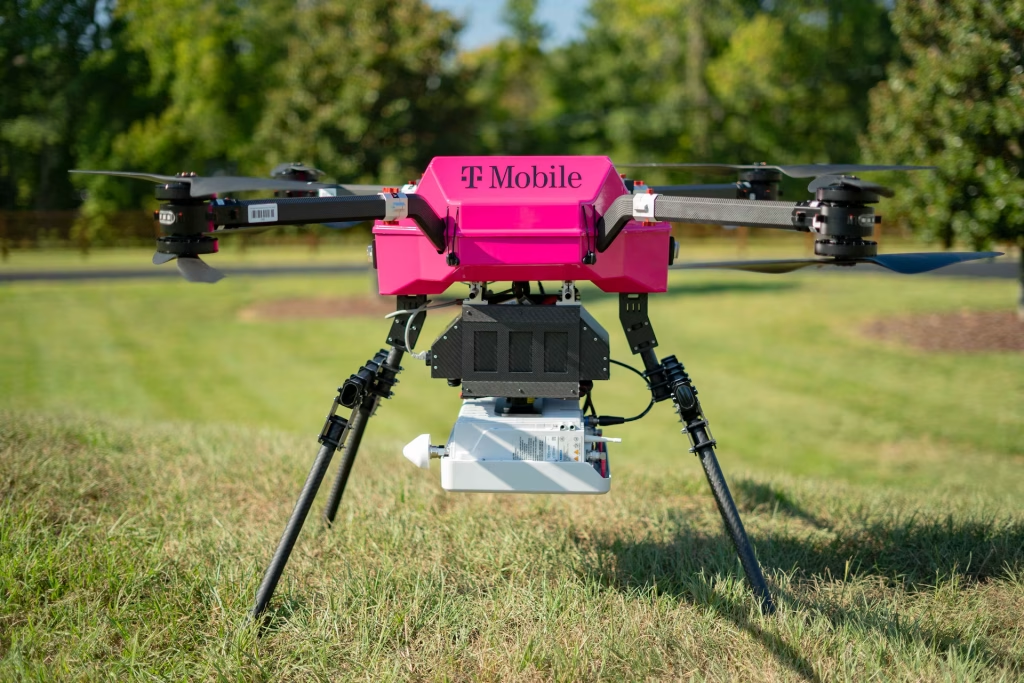
In addition to being one of the big names in telecommunications, T-Mobile is forging new relationships to bring new technology capabilities through its collaboration with Starlink. T-Mobile also provides Search and Rescue (SAR) drones and heavy-lift drones.
T-Mobile Starlink Direct-to-Cellular service is a combination of SpaceX’s Starlink satellites using T-Mobile’s mid-band spectrum nationwide service, which creates a satellite-to-cellular service. This service is being tested on hurricane-affected areas. It offers wireless emergency alerts (WEA) and basic texting (SMS) in the initial phases.

SAR drones have infrared and thermal imaging cameras to find people and objects. At the same time, Heavy Lift Drones can fly for an hour, cover a range of 60 miles and carry up to 50 pounds to deliver supplies, illuminate an operation or provide imagery.
These communication providers have taken action to assist communities affected by hurricanes, helping people reconnect with their loved ones in the aftermath of these devastating disasters. As we continue to face the impacts of climate change, more organizations must join this effort. We encourage companies and individuals to support disaster relief initiatives and ensure that no one is left without the means to communicate during times of crisis.
Featured image: Photo by Nikolas Noonan on Unsplash
Edited by James Sutton & Abbigail Earl


