


The Hate
Someone close to me recently said, “There is no peace or love in Islam.” This line has been rattling around my head ever since. Though I forgave this offense, the forgetting has been hard.
My phone reminds me daily that Muslims are barbaric, Islam is inherently violent and seeks global domination. Texas passed a curriculum teaching just that. On the eve of 9/11 there was outrage because the mayor of New York city was going to attend the commemoration ceremony of that tragedy–his offense? Being Muslim. In Austria, lawmakers just banned girls under the age of 14 from wearing the headscarf to school. And on and on.


I was not a Muslim on September 11, 2001, but I had been best friends with one for 5 years at that point. We met in the ninth grade, and like all souls who have an immediate affinity for one another, we became inseparable. I had just wrestled myself free from my protestant upbringing when I met Nadia. The first time I went over to her house, her mom had prepared the most delicious melange of Pakistani snacks anyone could ask for. It was my introduction to the samosa, and I was immediately in love.
Getting Curious
Over the next few years of high school and into undergrad, Nadia’s family adopted me as one of their own. I took shelter at their house from the chaos at mine. The only time we really talked about religion was in passing, sharing casual thoughts on God. The fact that she was Muslim barely registered. No one sat me down and tried to convert me. No one forced ideology down my throat. They met my curiosity with patience, logic, and grace.
Their generosity and intellectual warmth enveloped me at a time when I needed both most. That quiet example inspired me to finally read the Qur’an and begin to understand what was shaping these people. Lo and behold I found within its pages the highest standards for justice, mercy, peace, and logic. It told stories I already knew from the Bible, though with different emphases and perspectives—most notably, the belief that Jesus (peace be upon him) was a great prophet rather than God Himself. All at once, I felt at home. A deep peace settled over me whenever I read the text or listened to it being recited.
Motivation
That newfound peace was violently shattered on September 11, 2001 when America collectively lost its mind. The war on terror was launched, leaving millions of innocent civilians murdered in its wake—in the name of what? To this day I still can’t understand why America waged that war. No government claimed responsibility for the attacks, yet our military invaded Afghanistan and Iraq, later expanding into Syria and beyond. If you recall the official narrative, the hijackers were fifteen Saudis, two Emiratis, one Egyptian, and one Lebanese citizen. Curiously enough, not a single bomb dropped on any of those countries.
Immediately following the tragedy, media outlets began pushing anti-Muslim rhetoric by amplifying crimes committed by anyone claiming the faith, while ignoring religion when anyone else committed the same or worse atrocities. Lies were repeated so often they hardened into accepted facts: Islam is inspired by Satan. Islam is a political ideology, not a religion. Muslims are allowed to lie to you. Islam oppresses women.
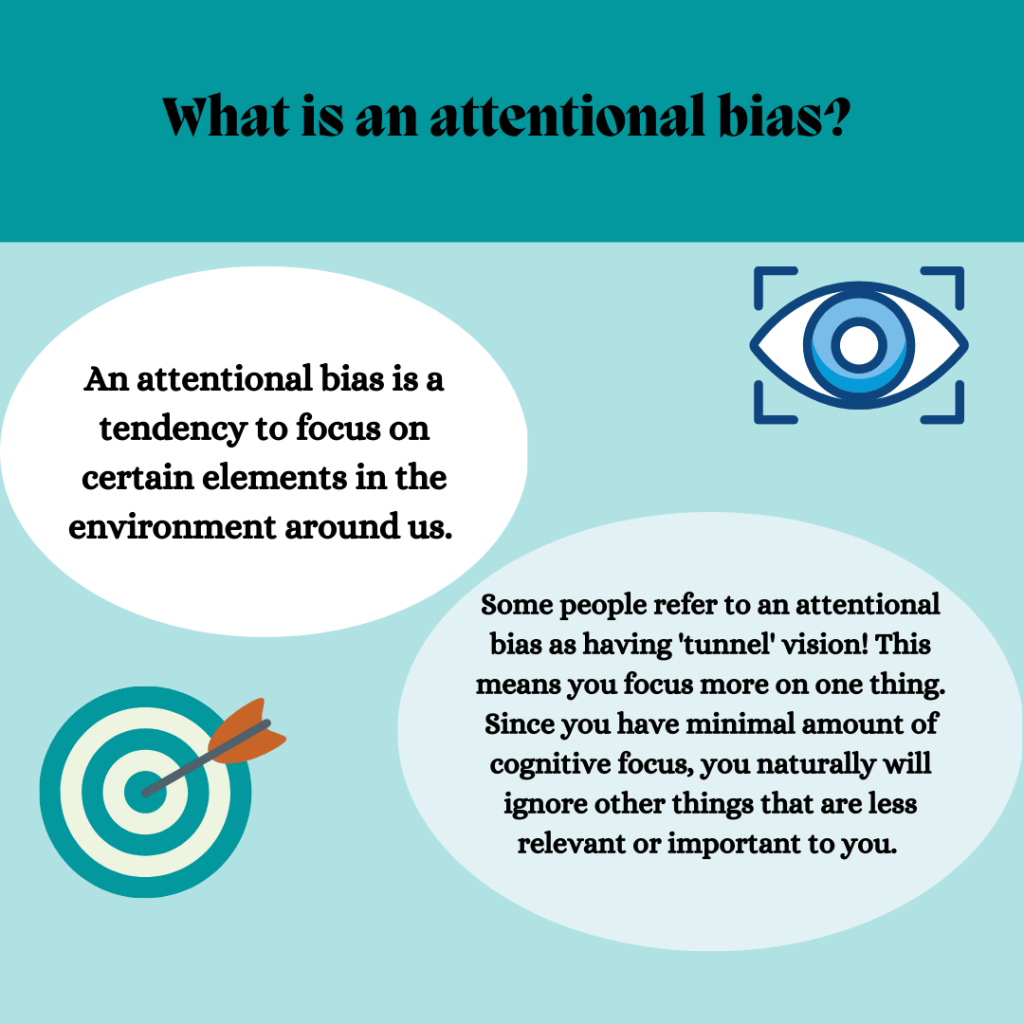
This propaganda is no accident. It relies heavily on two of the cognitive biases identified by psychologists today: attentional bias and confirmation bias. By feeding people misinformation and zooming in exclusively on bad actors, society manufactures guilt by association. It is not a new trick. Before Muslims, the targets were Italians, the Irish, Black Americans, Indigenous peoples, and Japanese Americans—ad nauseam. Whomever the crowd is conditioned to fear, the media spotlights every reason why we should.

The Consequences
Through that lens, it became clear that Muslim lives were treated as acceptable collateral damage while American lives were not. One life weighed more than the other, and so I became “the other.” I became a perceived oxymoron: an American Muslim.
Except it is not an oxymoron at all. In fact, the deeper I delve into the Islamic faith, the more I realize how deeply aligned it is with the best of American ideals. To put things in perspective, Muslims make up only about 1.6 percent of the United States population, yet we carry the weight of a nation’s projections about an entire religion.
The result? People who love and know me well can somehow hate Islam and yet still find me the exception. I am not the exception. I am the rule.
Islam teaches discipline, kindness and generosity. Muslims pray five times a day, see education as an act of worship and treat community service as a sacred duty. The greatest jihad—or struggle—in Islam is taming the nafs, the human ego. The word located at the dead center of the Qur’an is (وَلْيَتَلَطَّفْ), which means gentleness. Muslims believe in building families with healthy dynamics, shielding ourselves from harmful substances and systems that lead to bad outcomes. Islam teaches there is no compulsion in religion and that every soul is judged on its own deeds. We believe in the sanctity of life and hold ourselves to uncompromising standards of justice. Every principle in Islam is designed for the betterment of the individual and society. That is something to aspire to, not fear.
When I hear that there is no peace or love in Islam, I let the comment pass. I don’t need to debate the headlines because I remember what that faith looked like up close before anyone told me what to think of it. It looked like Nadia’s mom making sure a lost ninth grader had a safe place to land, no lectures attached, and a plate of homemade samosas pushed across the table. Peace and love weren’t missing from the faith I found—they were what invited me in.


